Honey bee nest removal from walls, roofs and chimneys
If honey bees have established a colony inside your home or another building, Craven Bees may be able to remove and rehome them using a specialist live cut-out. We work across Thornton-in-Craven, Skipton, Barnoldswick and the wider Craven area.
Please do not block the entrance or spray insecticide into it. That can make a live removal harder and may drive bees further into the building.
Is it a swarm or a nest inside the building?
Temporary honey bee swarm
A visible ball or cluster of bees hanging from a tree, hedge, fence or wall is usually a swarm. Normal local swarm collection is free.
Established honey bee colony
Bees repeatedly flying through a fixed hole in a wall, roof, soffit or chimney may already have built comb inside. This usually needs a planned structural removal.
What a live honey bee cut-out involves
A cut-out means carefully opening the relevant part of the structure so the whole colony can be removed rather than simply killing or sealing in the flying bees.
Identify and assess
We confirm that they are honey bees, locate the colony as closely as possible and consider access, the building fabric and any safety issues.
Plan safe access
We agree where access is likely to be made, what protection and containment are needed, and which parts of the building may need to be opened.
Remove and rehome
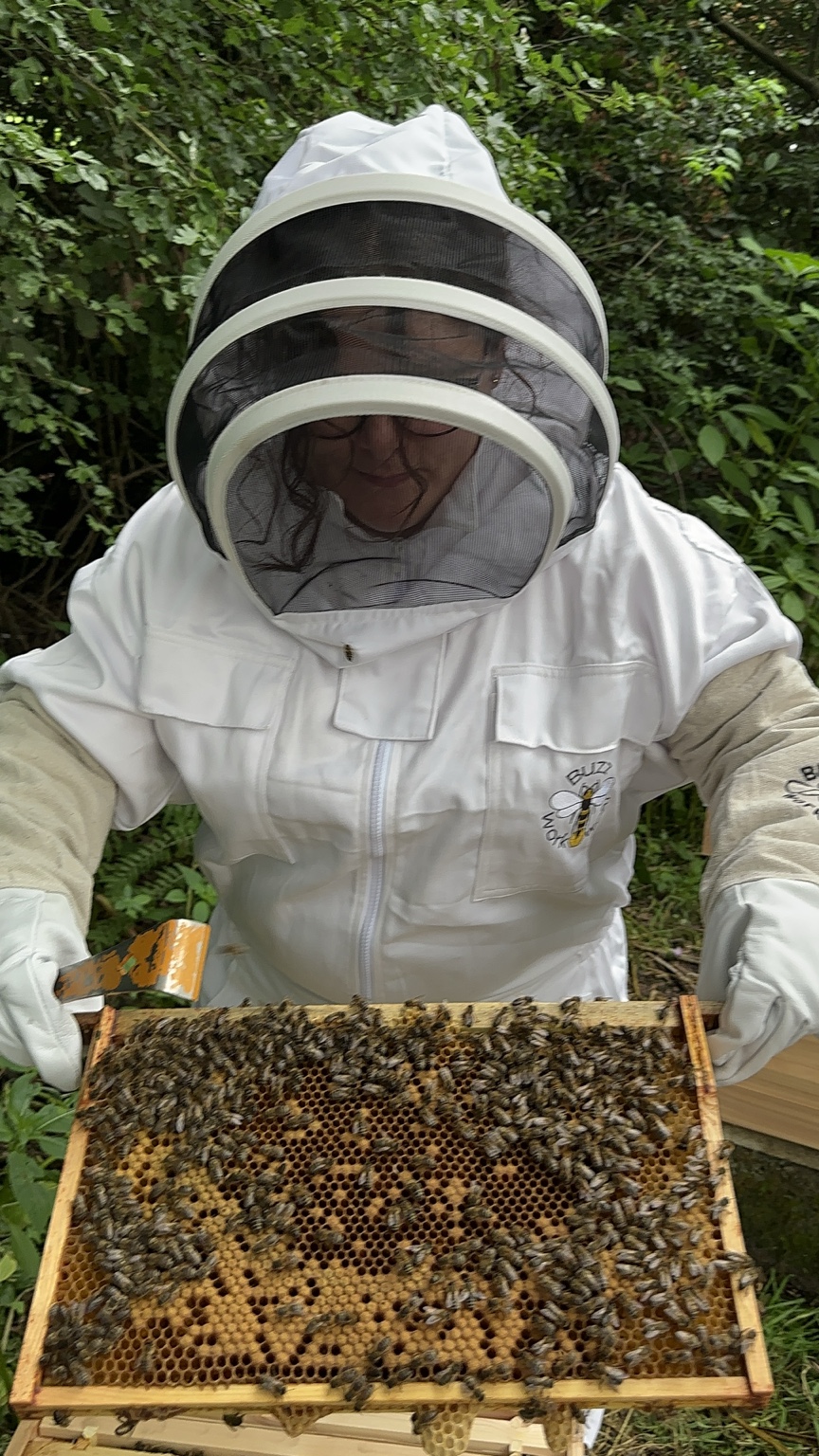
The bees are collected, suitable brood comb is transferred into frames, and the colony is moved into a hive for rehoming.
Comb, brood and honey
Accessible wax comb, brood and stored honey are removed. Leaving these behind can cause odour, leakage, pests or attract another swarm.
Cleaning and proofing
We endeavour to leave the work area clean and tidy. Permanent building repair, making good and final bee-proofing are normally completed by the property owner's builder or roofer unless specifically included in the quotation.
Free assessment, quotation and pricing
The initial assessment and quotation are free and without obligation. The cost of removal is available on application because it depends on the colony location, access height, building construction, equipment required, likely duration and whether specialist trades are needed.
What to send
Photos or video of the entrance and wider building, your postcode, how long the bees have been present and any known access into the roof or wall.
What we assess
The likely colony position, safe working access, the surface that may need opening, containment, waste and the likely amount of work.
Your written quotation
The quotation explains the proposed work, price, what is included, important exclusions and any repair or proofing that must be arranged separately.
Areas we cover
Craven Bees is based in Thornton-in-Craven. Structural removals are considered across Craven and nearby areas, including:
If the property is a little farther away, send the details anyway and we will let you know whether we can assess it.
Common questions
Can you remove bees without killing them?
That is the aim. Where access and conditions allow, the colony is removed alive, transferred into a hive and rehomed.
Can the entrance simply be sealed?
Not while the colony is active. Sealing bees in can send them into the building and leaves wax, brood and honey behind.
Will you repair the wall or roof afterwards?
Permanent making good and weatherproof repair are usually arranged with a competent builder or roofer. The quotation will make responsibilities clear before work starts.
Do you remove wasp or bumblebee nests?
We do not remove wasp nests. Bumblebee nests are usually best left alone; see our bumblebee nest advice.
Request a free assessment and quotation
Text or WhatsApp is preferred. Send photos or video, the property location and a short description of where the bees are entering.
Mobile: 07900 980494
Preferred contact: Text or WhatsApp
Base: Thornton-in-Craven, North Yorkshire
Assessment: Free and without obligation
Removal price: Available on application